INDUSTRY:

Fast fashion

Focus

Reduce returns

YEAR:

2024

EXPERIENCE:

UX/UI design

Read time

5 min
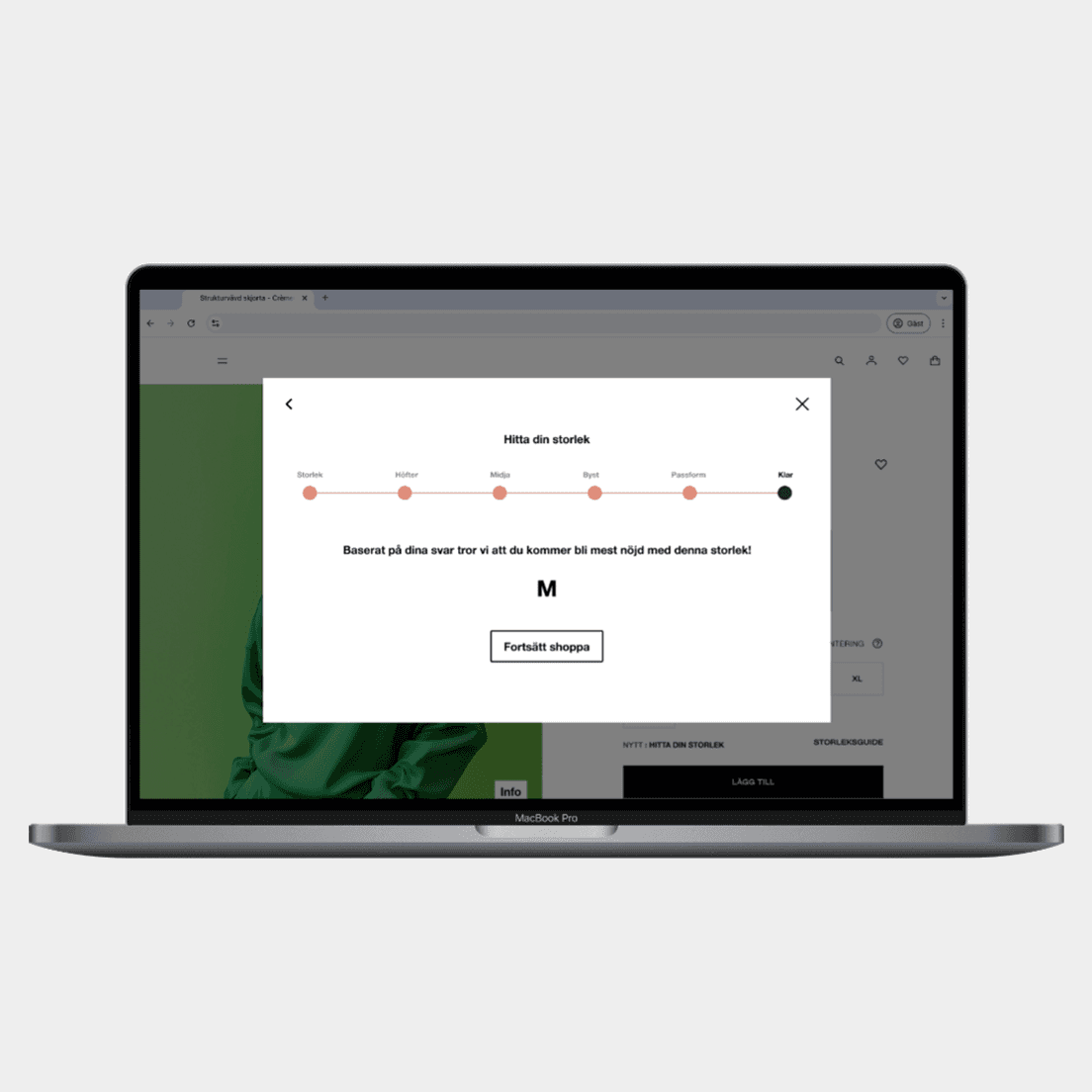
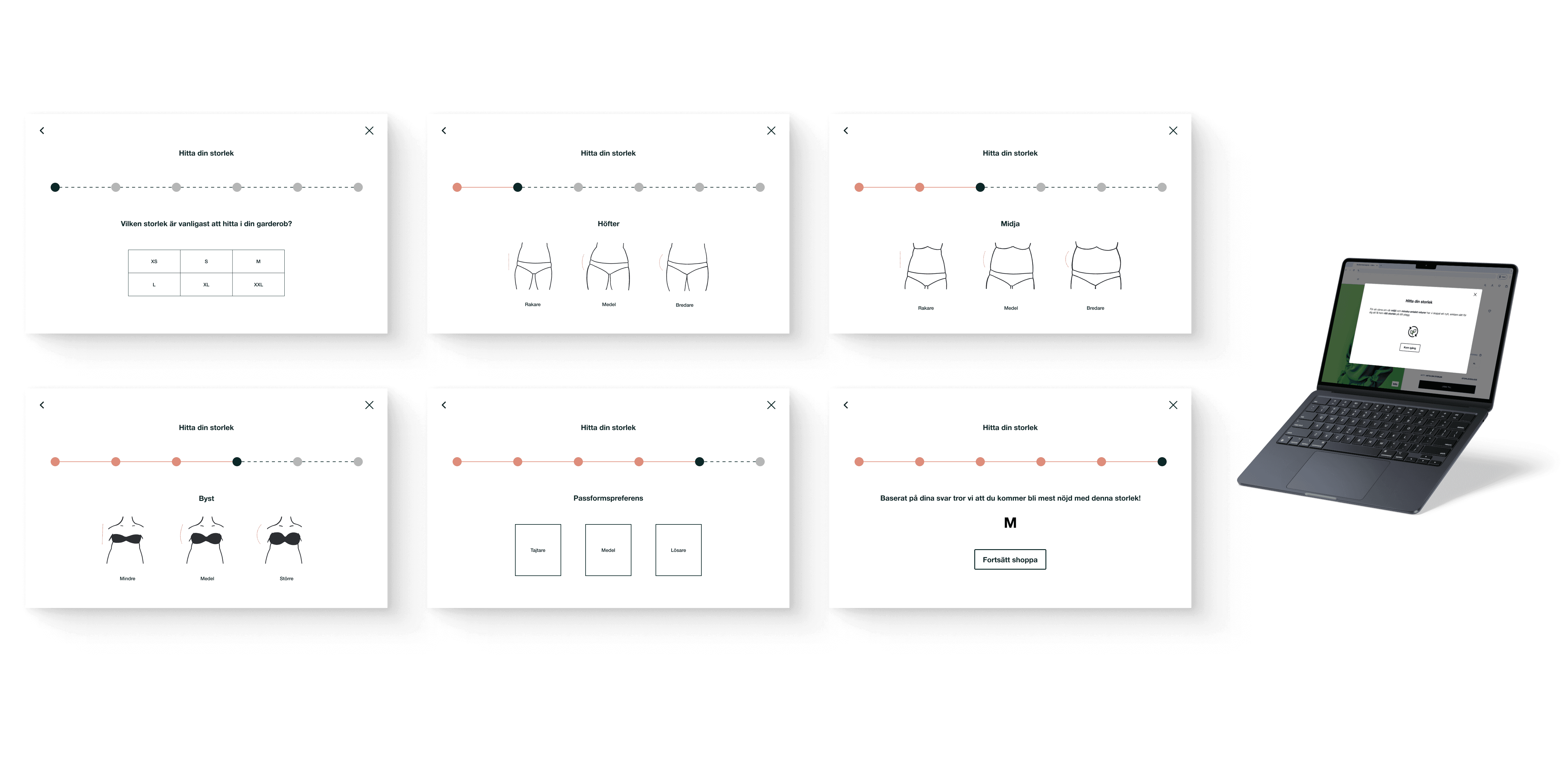
Second project. a laptop showcasing find your size, features a horizontal progress bar with size factors such as hips, waist, and bust. The recommendation suggests size 'M' based on user input, with a button labeled continue shopping below.

Find my size

Reduce returns, protect the planet
about.

70% of people believe our solution will make it easier to find the right size, helping reduce returns and benefiting the environment.

Our mission was to tackle the high volume of clothing returns. Through user research, we identified that incorrect sizing, often based on measurements, was a key issue. We developed a solution that helps customers find the right size by focusing on body shape, ultimately reducing returns and improving the overall shopping experience.
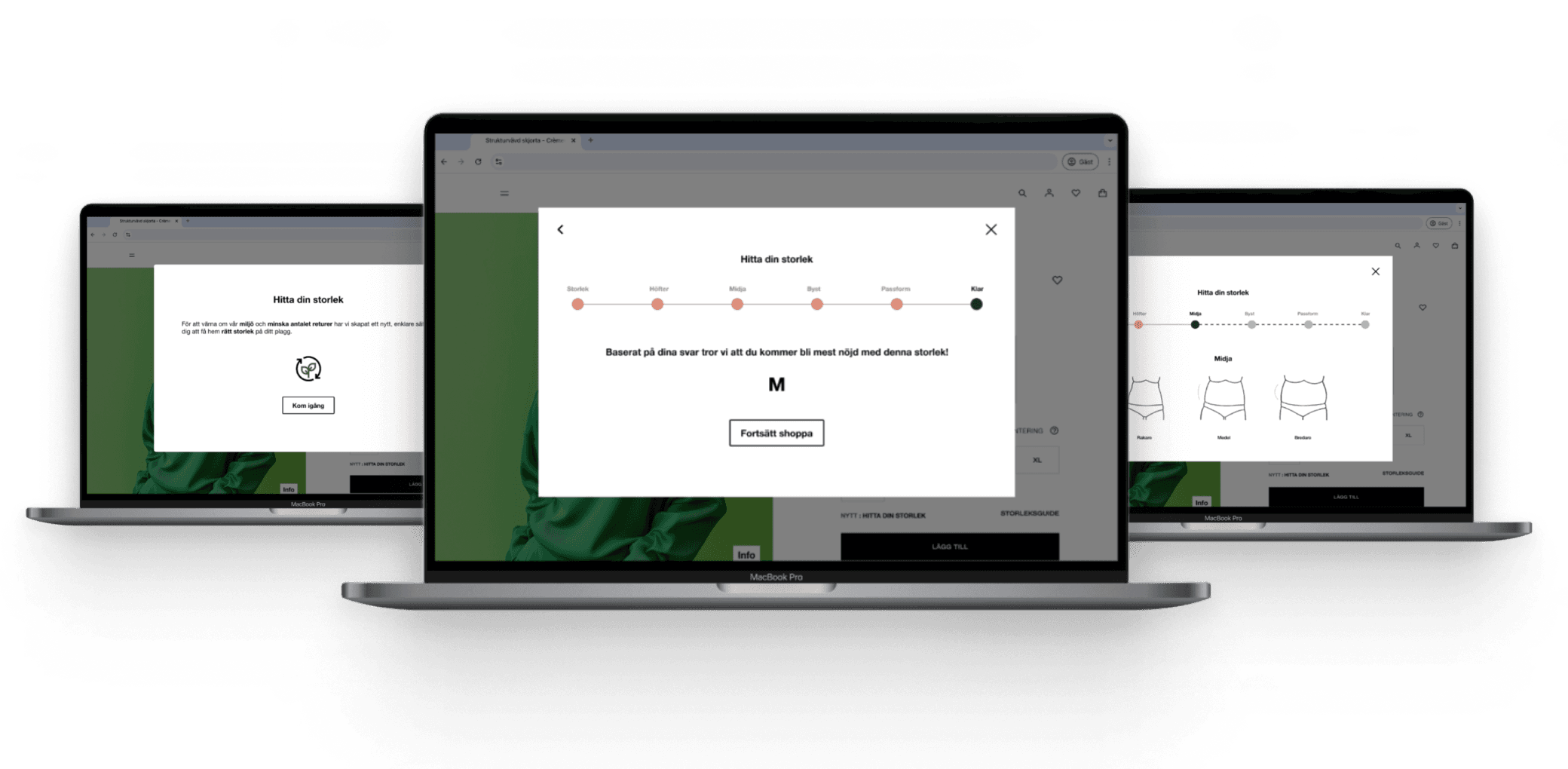
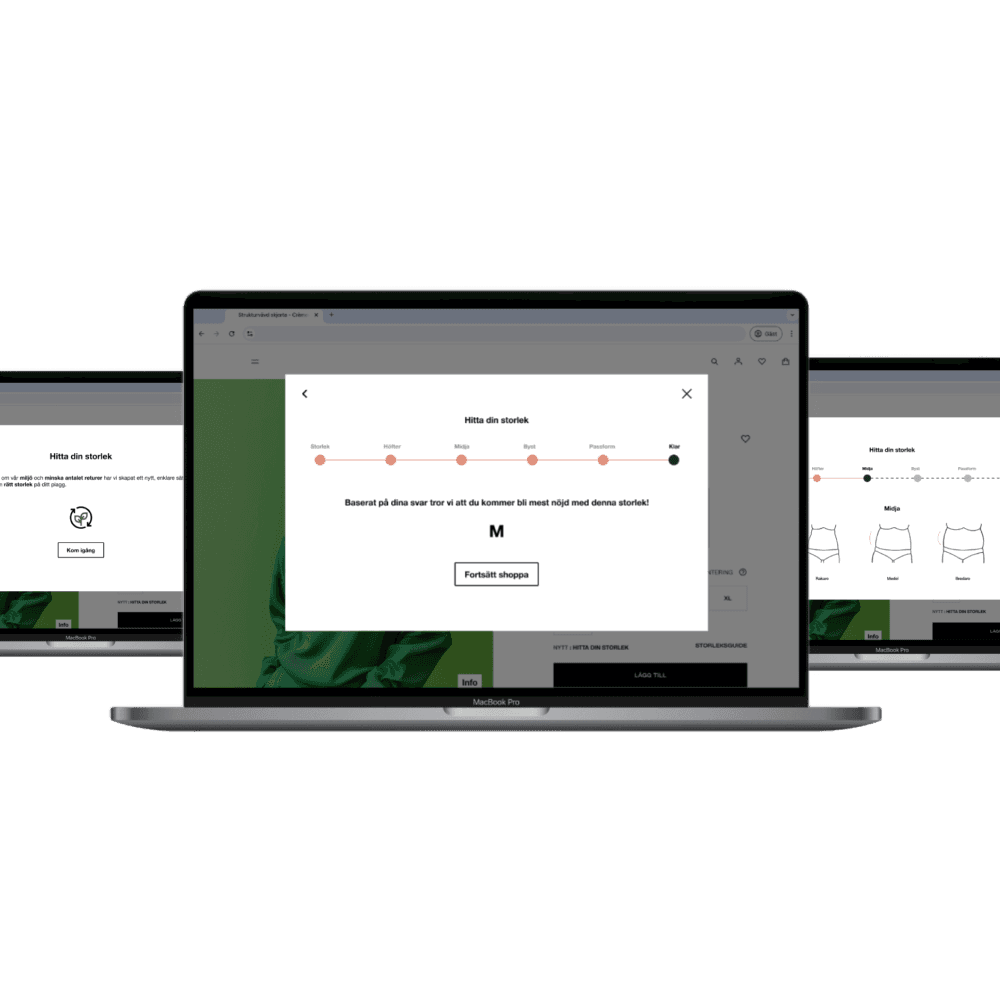
Three laptops, the left screen shows an introduction message about finding the right size, the center screen presents a size recommendation based on user input, and the right screen displays a selection interface for waist shapes.
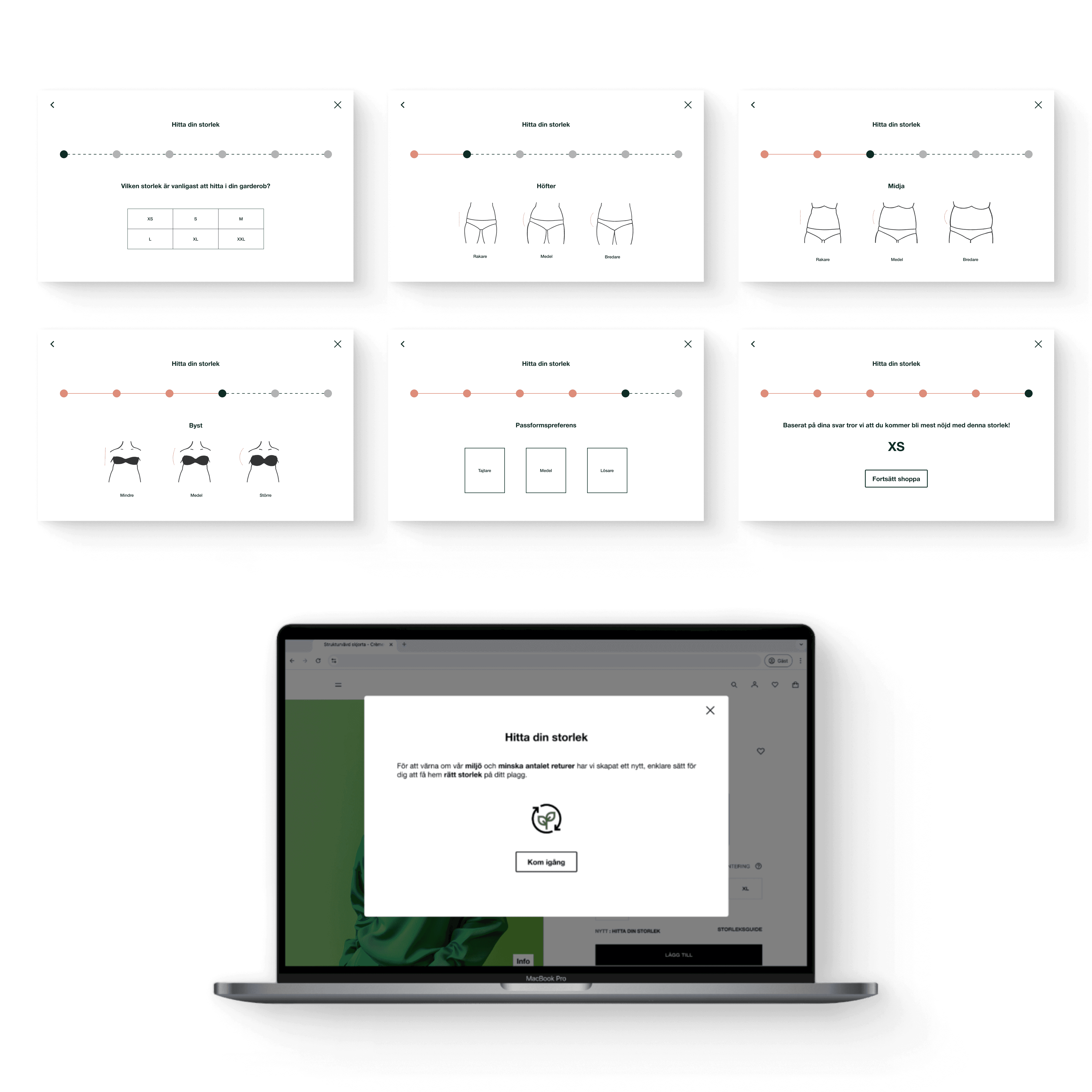
A visual representation of all the steps in the 'Find My Size' feature. The image displays six different UI screens guiding users through the process, including selecting common sizes, hip shape, waist shape, bust size, fit preference, and the final recommended size. A laptop on the right side of the image shows the introduction screen of the tool.

Skip to result

challenge.

How can we solve the sizing challenge and reduce returns, while keeping shopping fast and easy?

The challenge was clear: Tackle the high volume of returns caused by incorrect sizing, while ensuring the shopping process remained fast and easy. Many customers prioritize speed and free shipping over finding the right size, leading to sizing errors. Our goal was to create a solution that addressed this issue, without compromising customers desire for a quick, convenient shopping experience.

The data from our initial survey of 67 participants revealed key insights that were crucial in shaping the direction of the project.
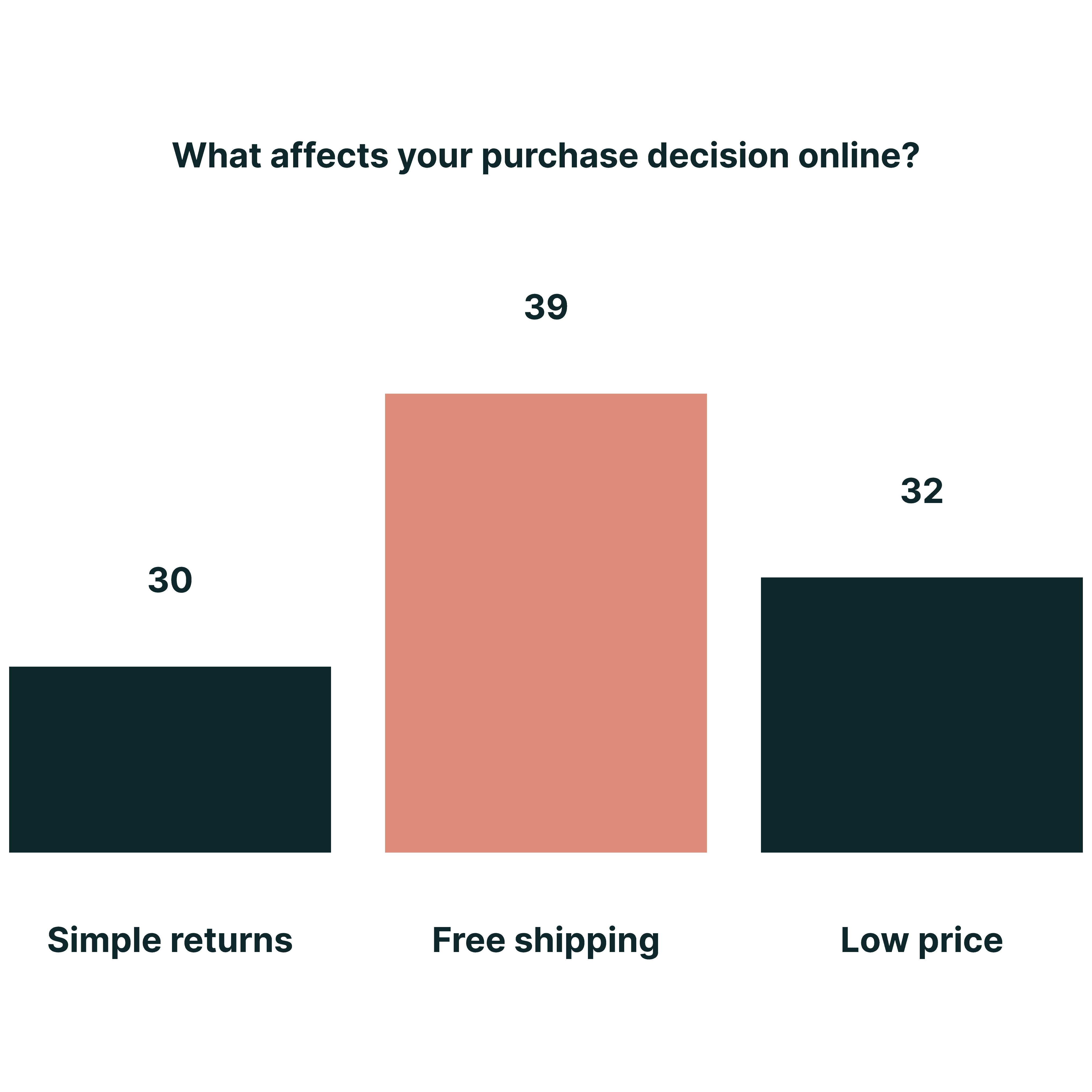
A bar chart titled 'What affects your purchase decision online?' displaying three factors: 'Simple returns' (30), 'Free shipping' (39), and 'Low price' (32). 'Free shipping' has the highest influence, followed by 'Low price' and 'Simple returns'
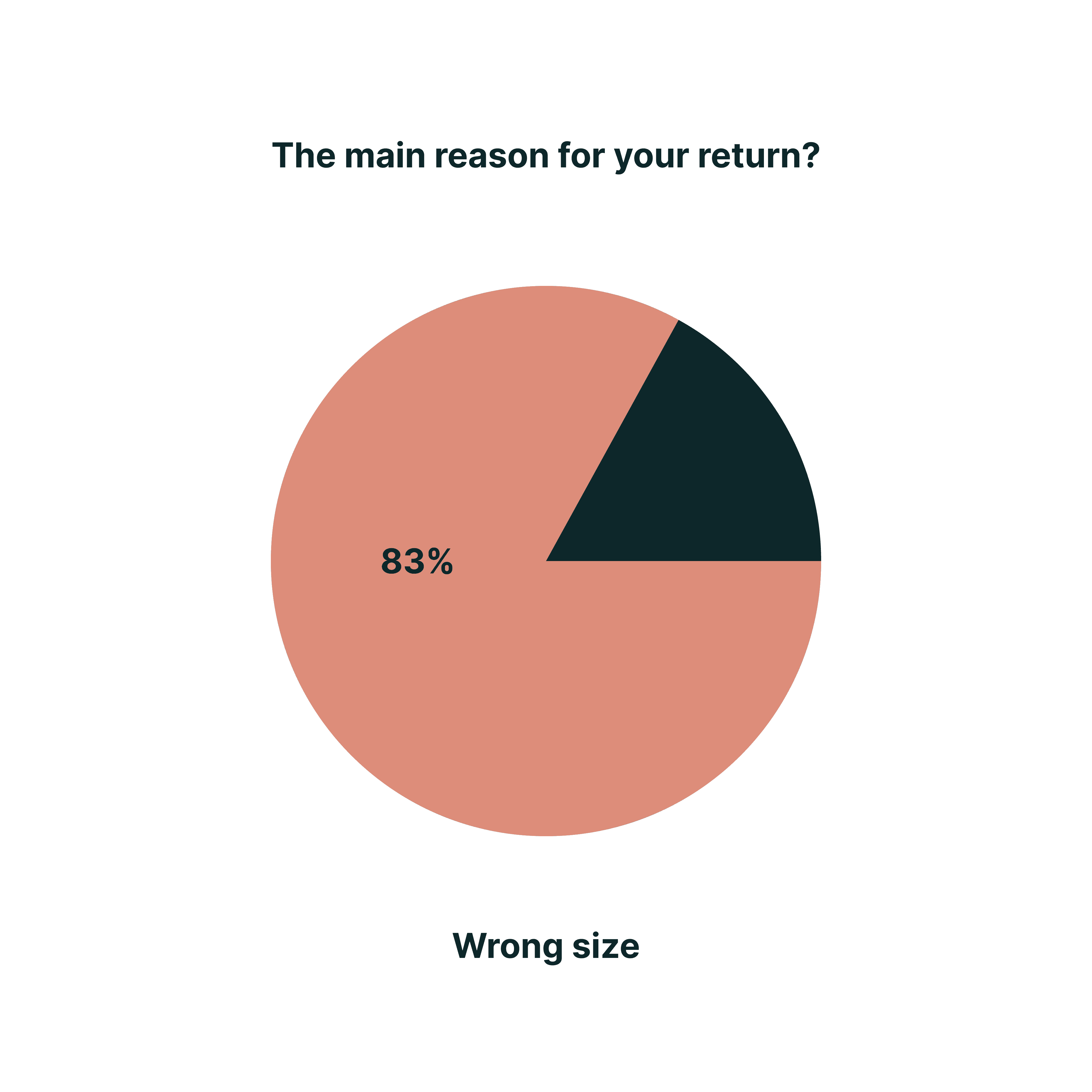
A pie chart titled 'The main reason for your return?' showing that 83% of returns are due to 'Wrong size'. The majority of the pie chart is colored in a light red shade, indicating the dominant reason for returns.
research & key takes.

83% of participants have returned clothes due to the wrong size.

From our research, which included a survey, 6 interviews and 6 think out loud tests on an existing clothing website, we identified the following key takeaways…

Main reasons for returns:

  • Incorrect size (Mostly linked to non-user-friendly measurement guides)

  • Product not meeting expectations

  • Poor quality

Most important factors when making purchase decisions:

  • Free shipping

  • Low prices

  • Easy returns

Return awareness:

  • Low awareness of return policies

  • Majority of customers are unaware of the environmental impact of returns

Learning: We needed to be more specific in our survey to accurately identify and reach our target audience. The lack of specificity in our research led us to adopt the motto, "Every return matters".
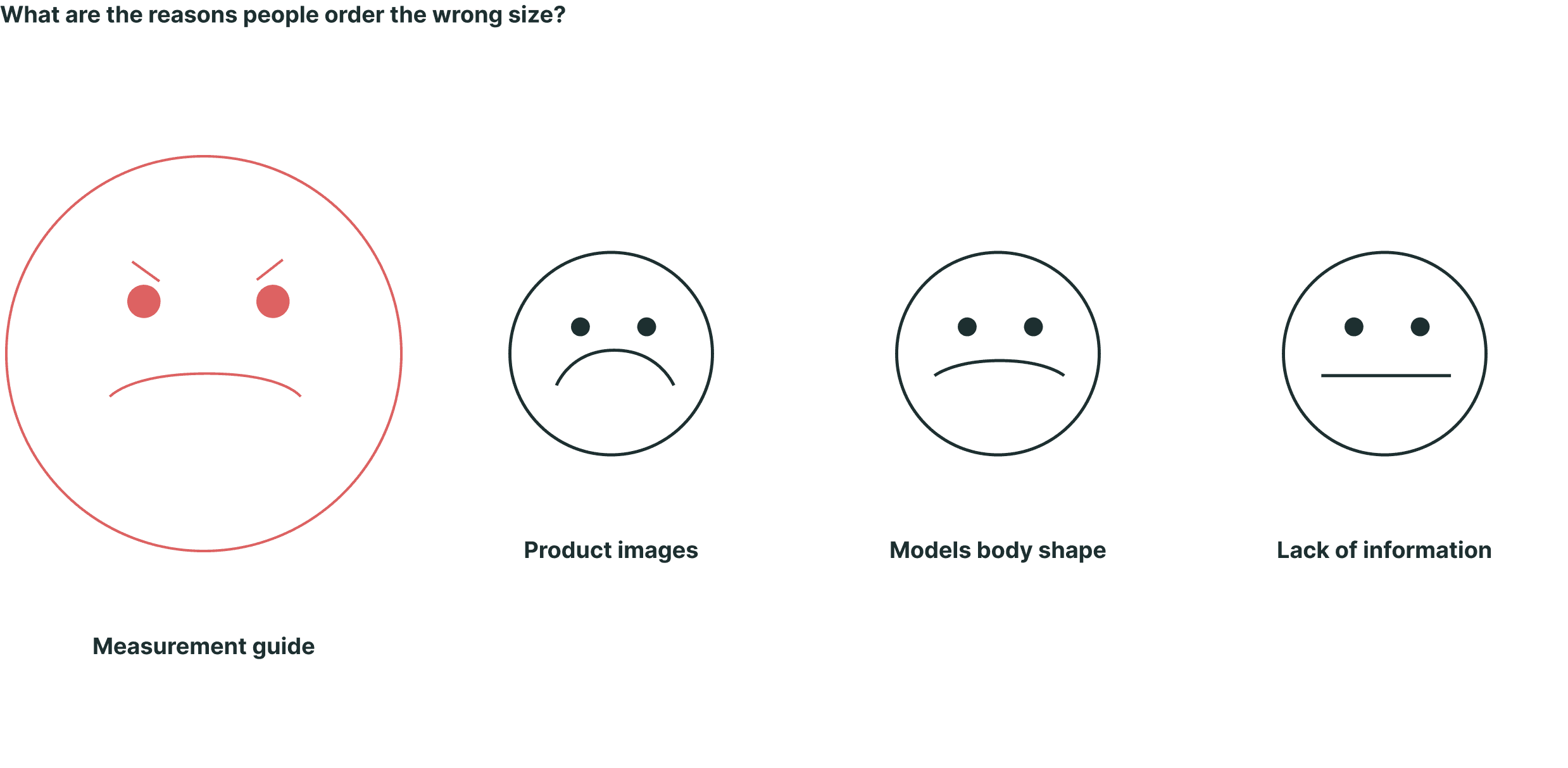
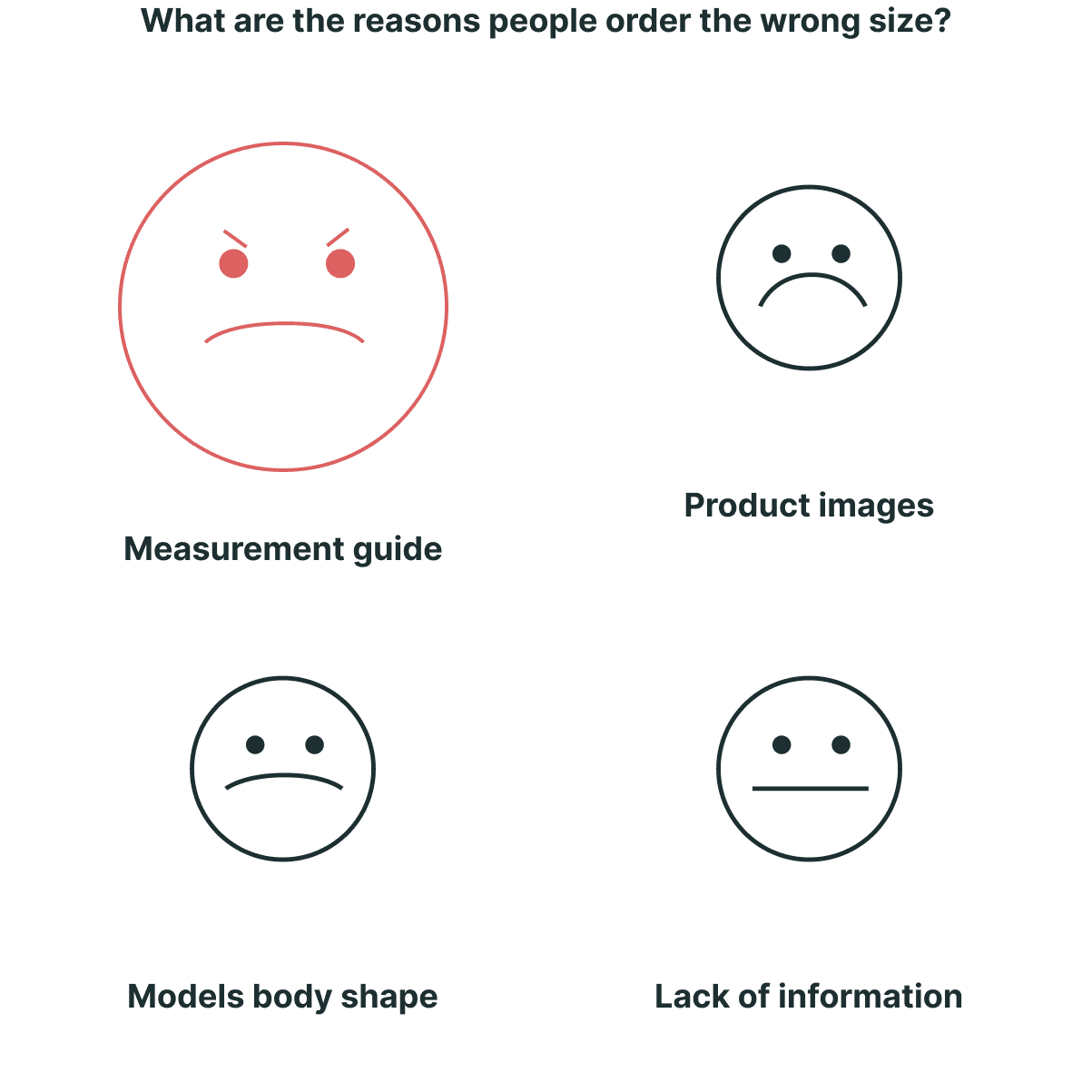
An infographic titled "Reasons why people order the wrong size" featuring four facial expression icons. The largest, angriest face represents "Measurement guide" as the main issue. Smaller, sad and neutral faces represent "Product images," "Models' body shape," and "Lack of information" as additional factors.
design.

How our design process tackled key challenges and delivered results

To address the sizing issue, we began with ideation. Brainstorming and Crazy-8 exercises helped us explore a wide range of ideas. From there, we moved on to low-fi sketches, user flows, and wireframes, focusing on the core features that would solve the problem.

We then transitioned to Figma, refining our designs into mid-fi versions to better visualize the user experience. After conducting usability tests and gathering feedback, we made further adjustments and created a high-fidelity product that directly tackled the sizing issue.

Learning: Design with a mobile-first approach. It's always easier to scale up than to scale down.
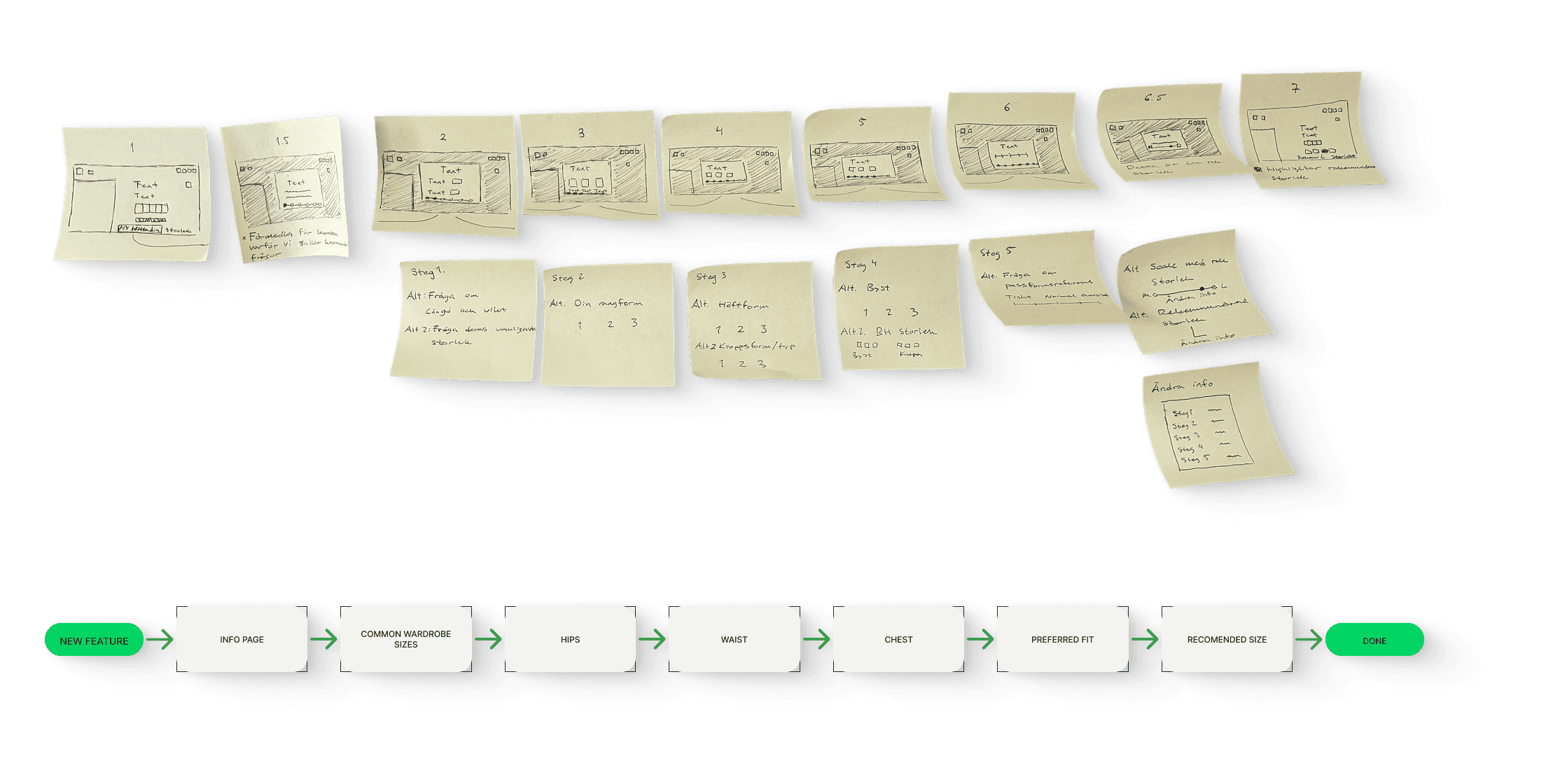
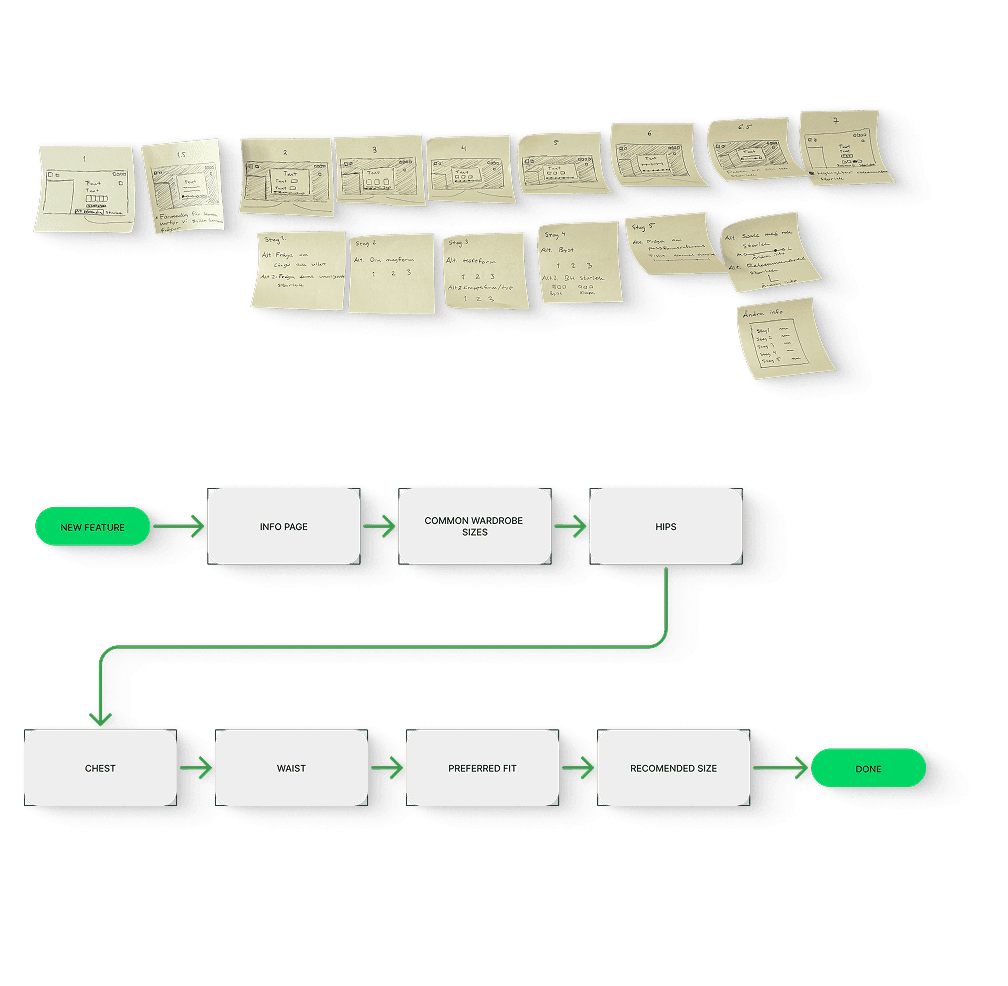
A series of sticky notes arranged in a structured manner on a white surface, resembling a wireframe  for a digital interface or user experience flow. Under the sticky notes is a digital user flow showing the sticky notes flow, It begins with a green 'New Feature' node, followed by sequential steps: 'Info Page,' 'Common Wardrobe Sizes,' 'Hips,' 'Waist,' 'Chest,' 'Preferred Fit,' and 'Recommended Size,' before ending at a green 'Done' node.
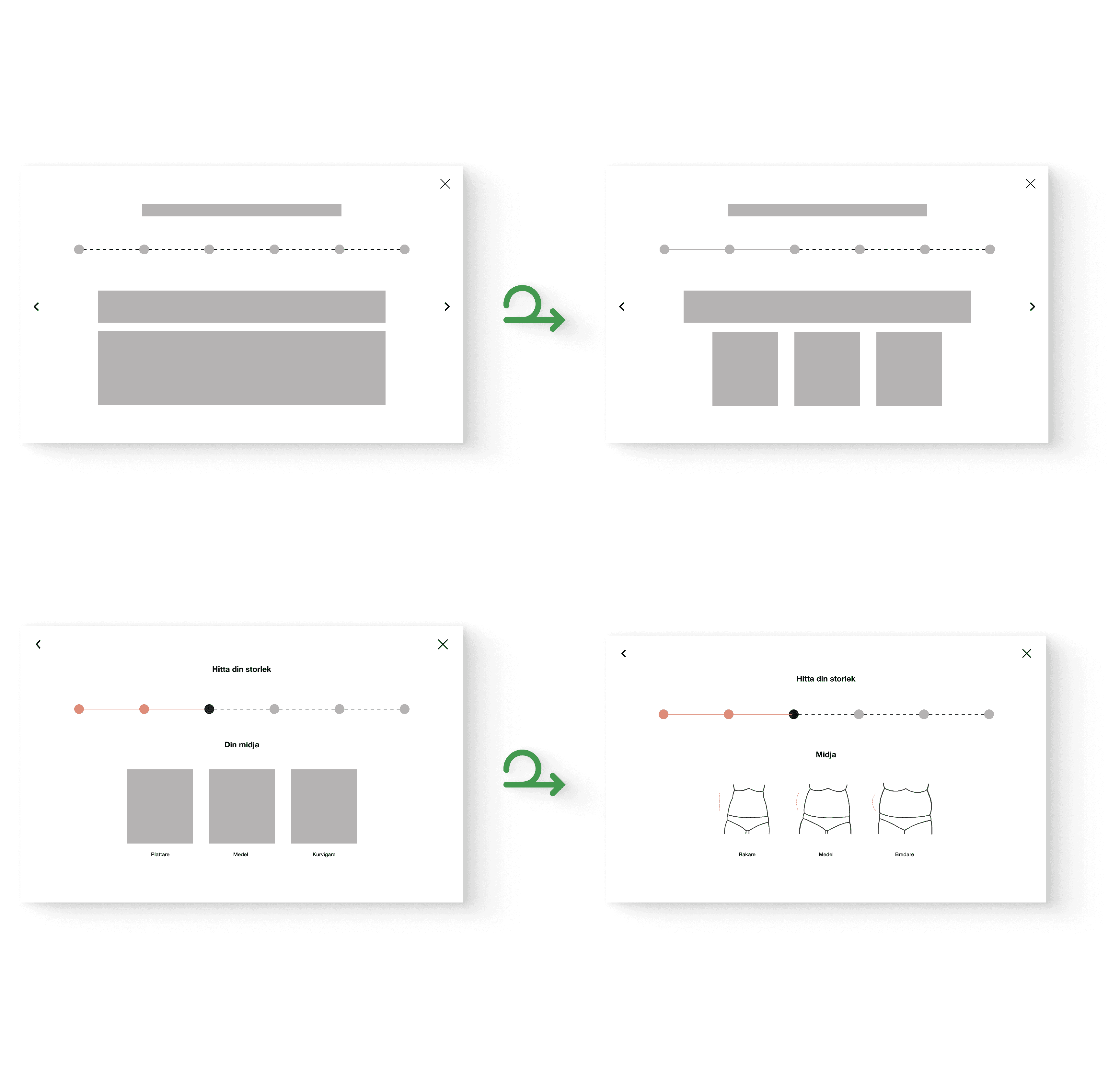
Wireframe iteration showing layout improvements for the waist step. Starts with a lo-fi wireframe and step indicator, evolving to the final design in four steps. The last step features three waist size choices with a highlighted step indicator above.
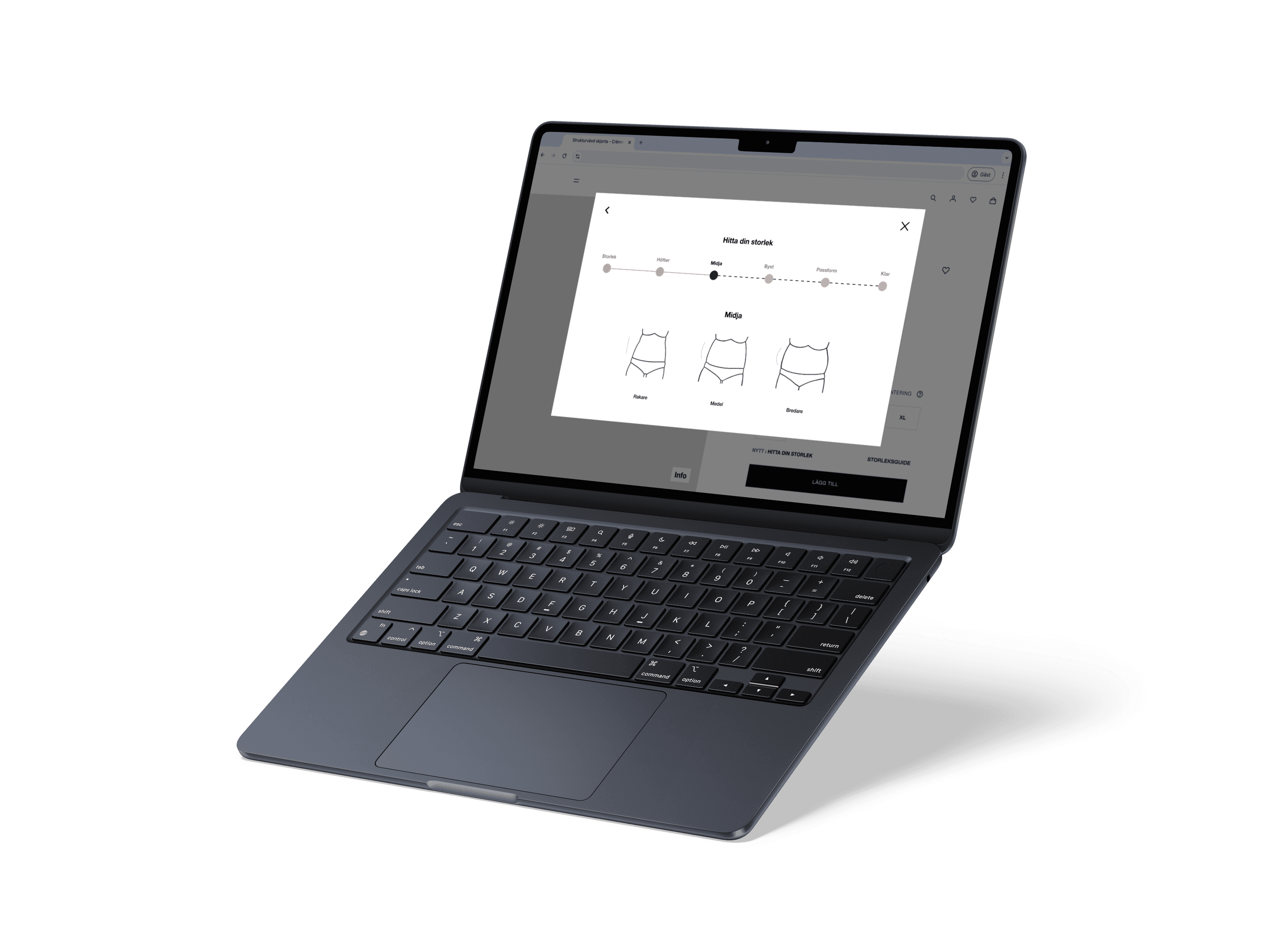
A computer showing the finish product, three waist size choices with a highlighted step indicator above.
result.

Sizing Made Simple: Reducing Returns with Body-Based Fit

Through the design thinking process, we gained a deep understanding of user needs, which directly guided our solution. By addressing the main reason for returns (incorrect sizing) we created a body-based size guide that helps customers find the right fit more easily. This not only improves the shopping experience but also reduces returns.

70% of our test audience believes our solution will make it easier to find the right size and minimize returns. By simplifying the process and aligning with customers' desire for speed, ease, and convenience, we've developed a tool that benefits both the customer and the environment.

Text announcing a new feature: "NEW: FIND YOUR SIZE", with "NEW" highlighted in soft pink to draw attention.
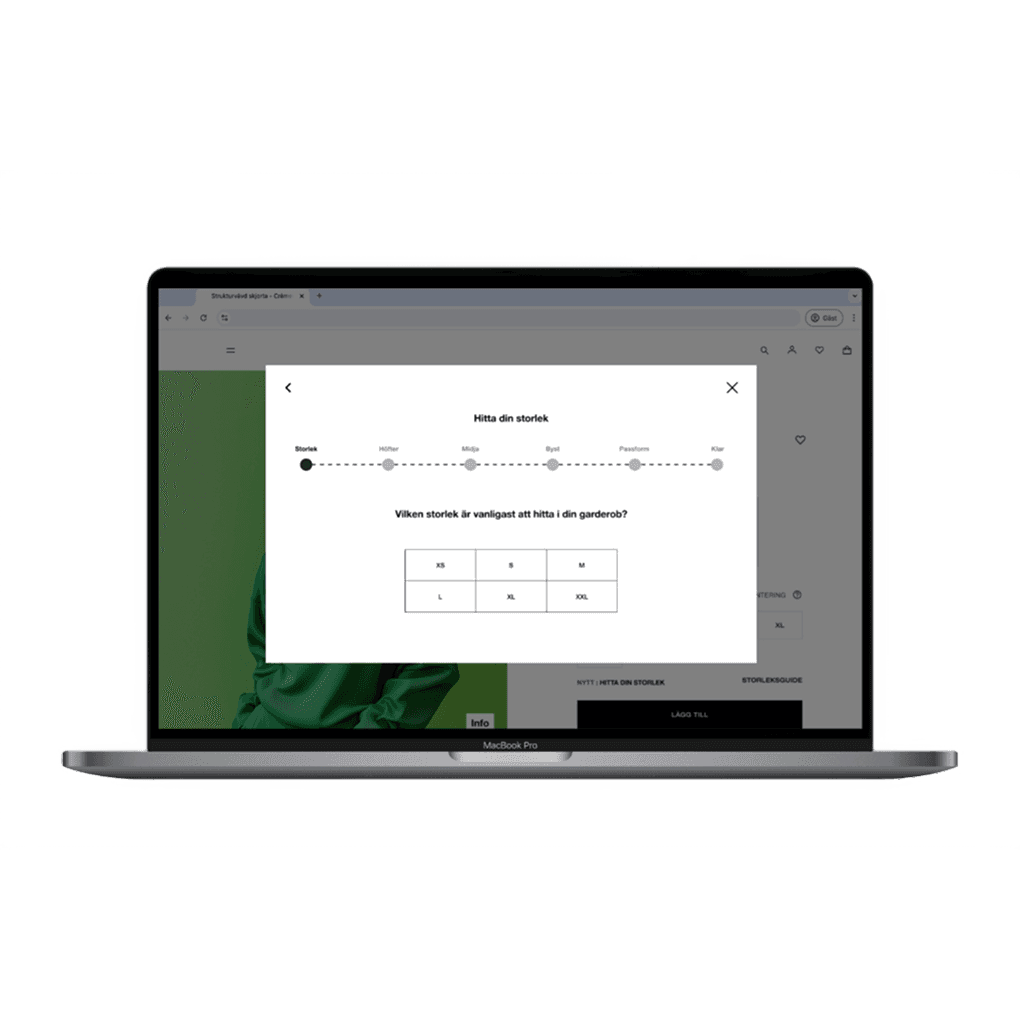
A laptop displaying the "Find My Size" feature, allowing users to select their common wardrobe size from six alternatives.
A visual representation of all the steps in the 'Find My Size' feature. The image displays six different UI screens guiding users through the process, including selecting common sizes, hip shape, waist shape, bust size, fit preference, and the final recommended size. A laptop on the right side of the image shows the introduction screen of the tool.
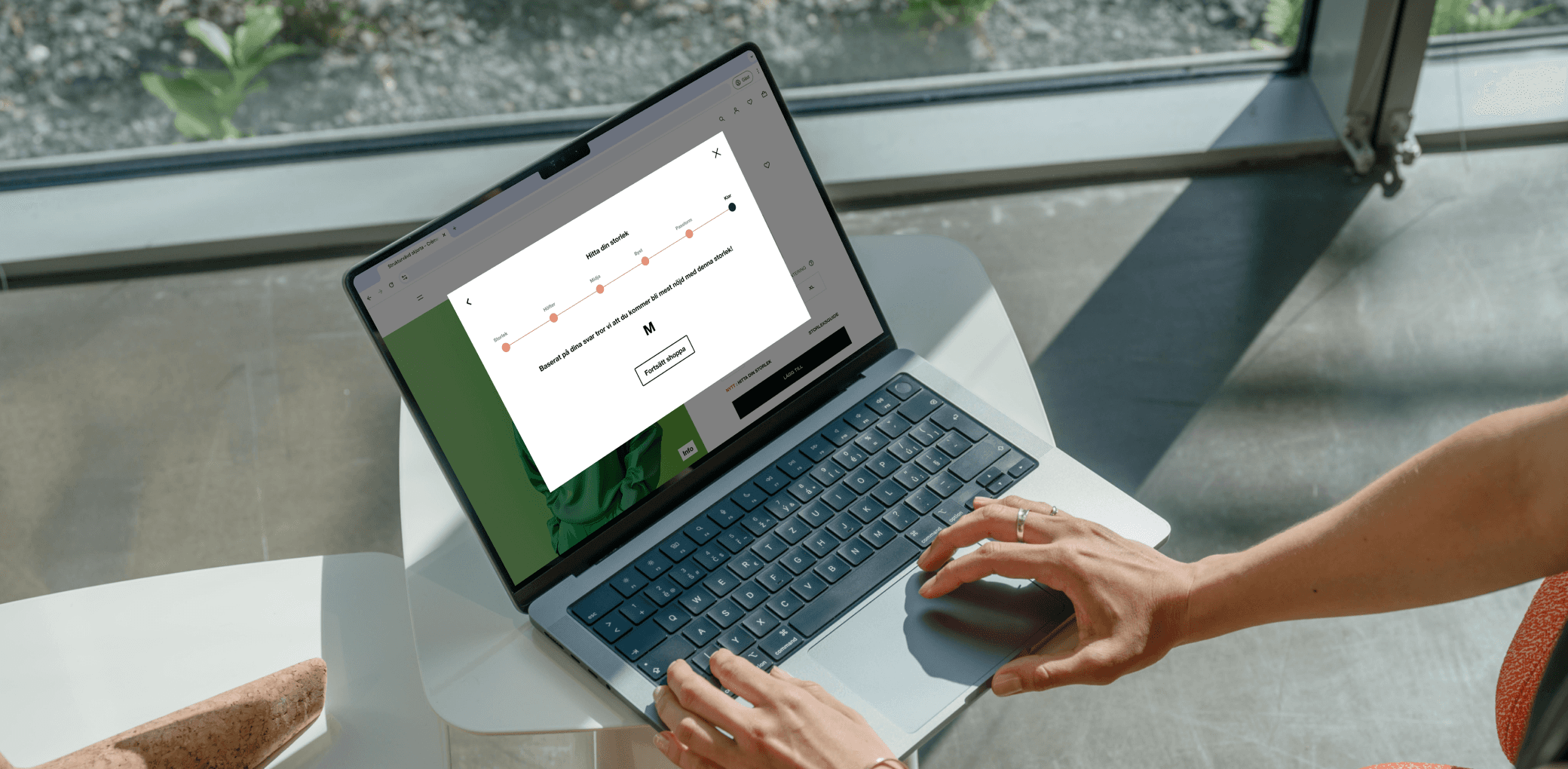
A person using a laptop to complete the "Find My Size" feature, selecting a recommended size based on previous inputs. The screen displays the final size suggestion with a confirmation button.

Back to top

Curious about what we can create together?
Let’s bring something extraordinary to life!

Available For LIA

+46 (0)72 155 27 64

Lukas.Lindbergg@gmail.com

UX design student

Lukas Lindberg

Designing with

people in mind

Curious about what we can create together?
Let’s bring something extraordinary to life!

Available For LIA

+46 (0)72 155 27 64

Lukas.Lindbergg@gmail.com

UX design student

Lukas Lindberg

Designing with

people in mind

Curious about what we can create together?
Let’s bring something extraordinary to life!

Available For LIA

+46 (0)72 155 27 64

Lukas.Lindbergg@gmail.com

UX design student

Lukas Lindberg

Designing with people in mind

Create a free website with Framer, the website builder loved by startups, designers and agencies.